Posts about Appreciation

Thanks, Daisy Disk

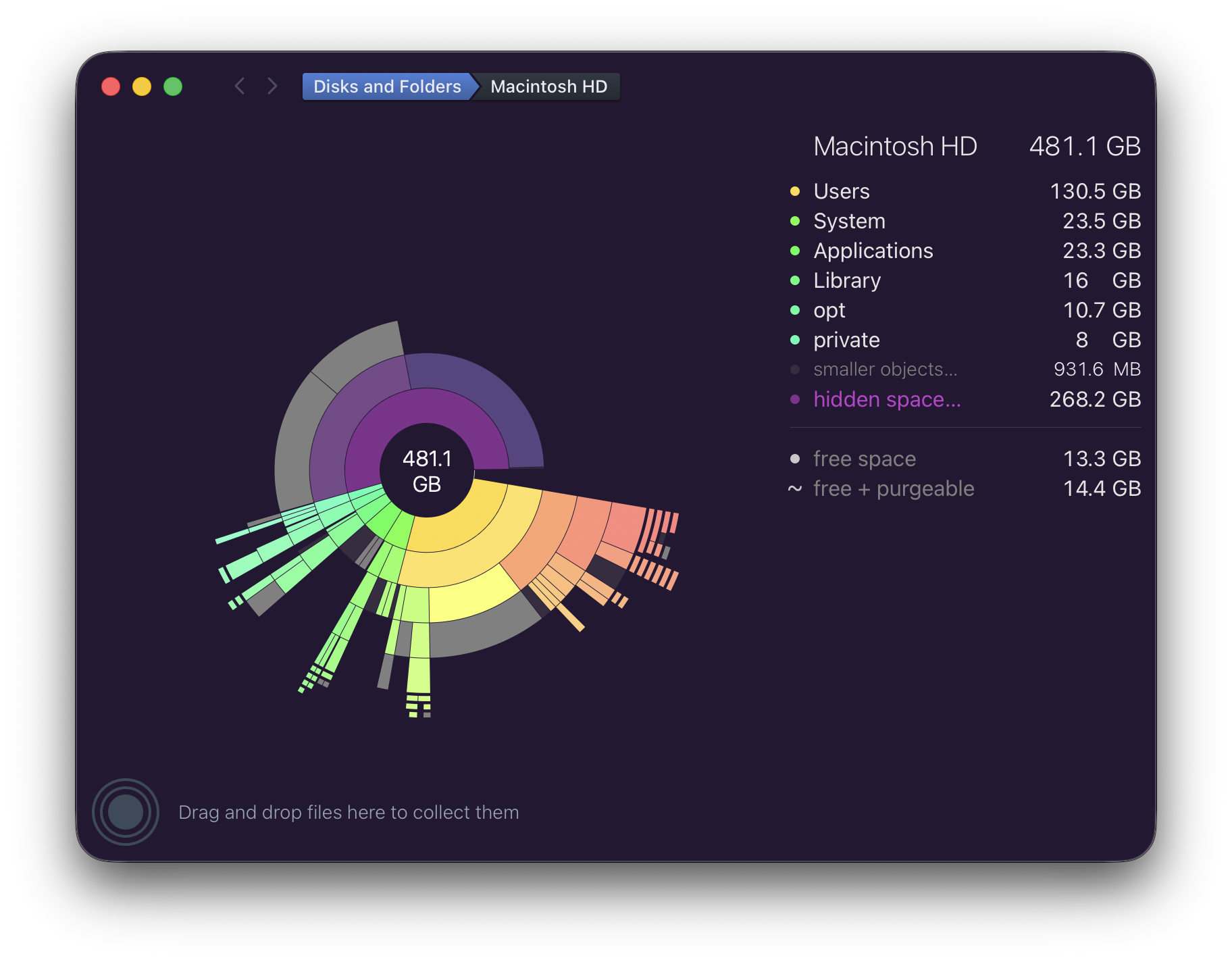
Screenshot of Daisy Disk with a disk nearly full

Recently I've been beguiled by my local disk being almost full. This is on my everyday M3 MacBook Air running the latest Tahoe 26.2.

For years I've used Daisy Disk to debug space issues like this, it's great. In this case it showed the problem, but wasn't able to narrow down what the problem was nor remove it.

Not have any success through the normal means ("Googling around"), I wrote the developer of Daisy Disk, Oleg. They explained the problem and suggested a workaround. It worked like a champ! I included the explanation below and screenshots showing before and after.

I want to say thanks to Oleg for their help. And this is a nice opportunity to say thank you to indie developers in general who are often so helpful sharing their expertise. What a wonderful and important part of our community.


Oleg's explanation:

    This error has recently been reported by a few other users as well, and our investigation shows that it's caused by a new bug in macOS, introduced in one of its recent updates. (It didn't happen before). The symptom is exactly like in your case - a Time Machine snapshot becomes damaged for unknown reason, and it cannot be deleted in the normal way - not only in DaisyDisk, but also not in Terminal, using the tmutil command-line tool. Moreover, the tmutil tool doesn't even list the damaged snapshot. It becomes almost entirely lost, while it still consumes disk space.

    We have found the following workaround solution. Please launch the system's Disk Utility (/Applications/Utilities/Disk Utility.app) and in the left sidebar, select your data volume, likely called "Macintosh HD - Data". Note that there will also be another volume called "Macintosh HD" (without "Data"), but you should select specifically "Macintosh HD - Data". Then select the View \> Show APFS Snapshots menu command. In the lower part of the window, you will see the damaged Time Machine snapshot in the list. Please select it and then click the "-" (minus) button at the bottom to delete it.

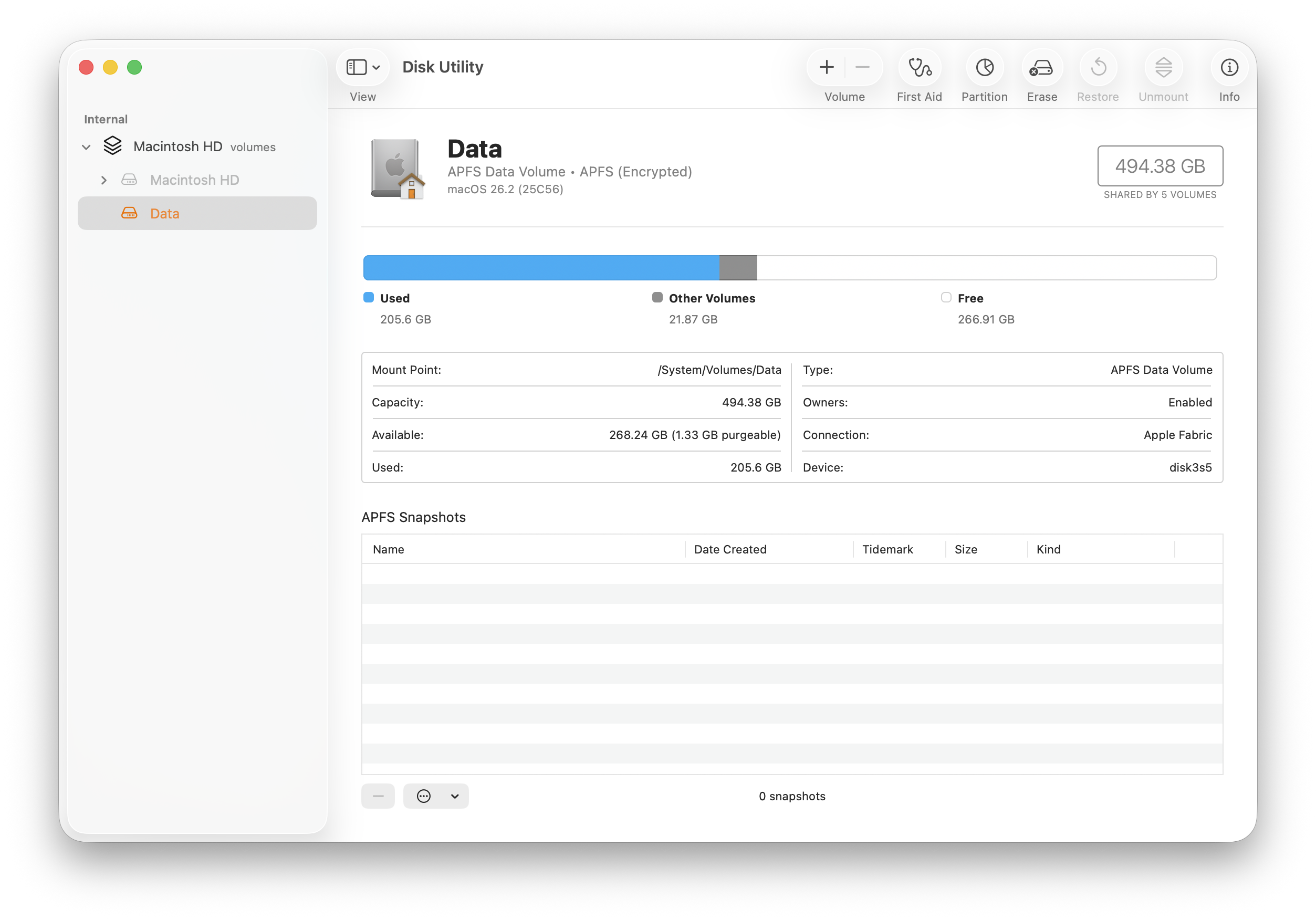
And screenshots showing the before and after. Note the two broken snapshots in the list below.
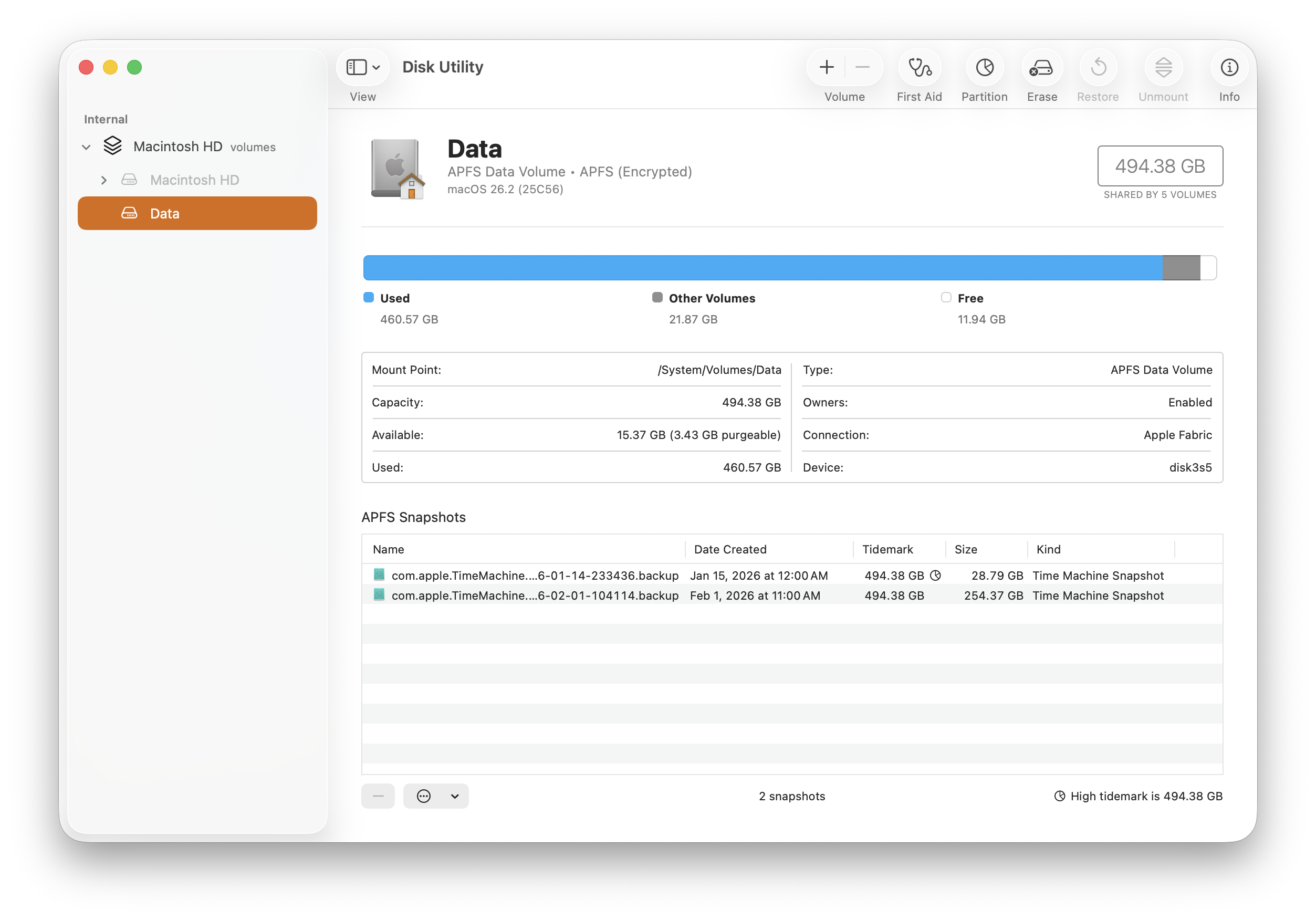
Disk utility showing disk almost full

After

Disk utility showing disk back to normal

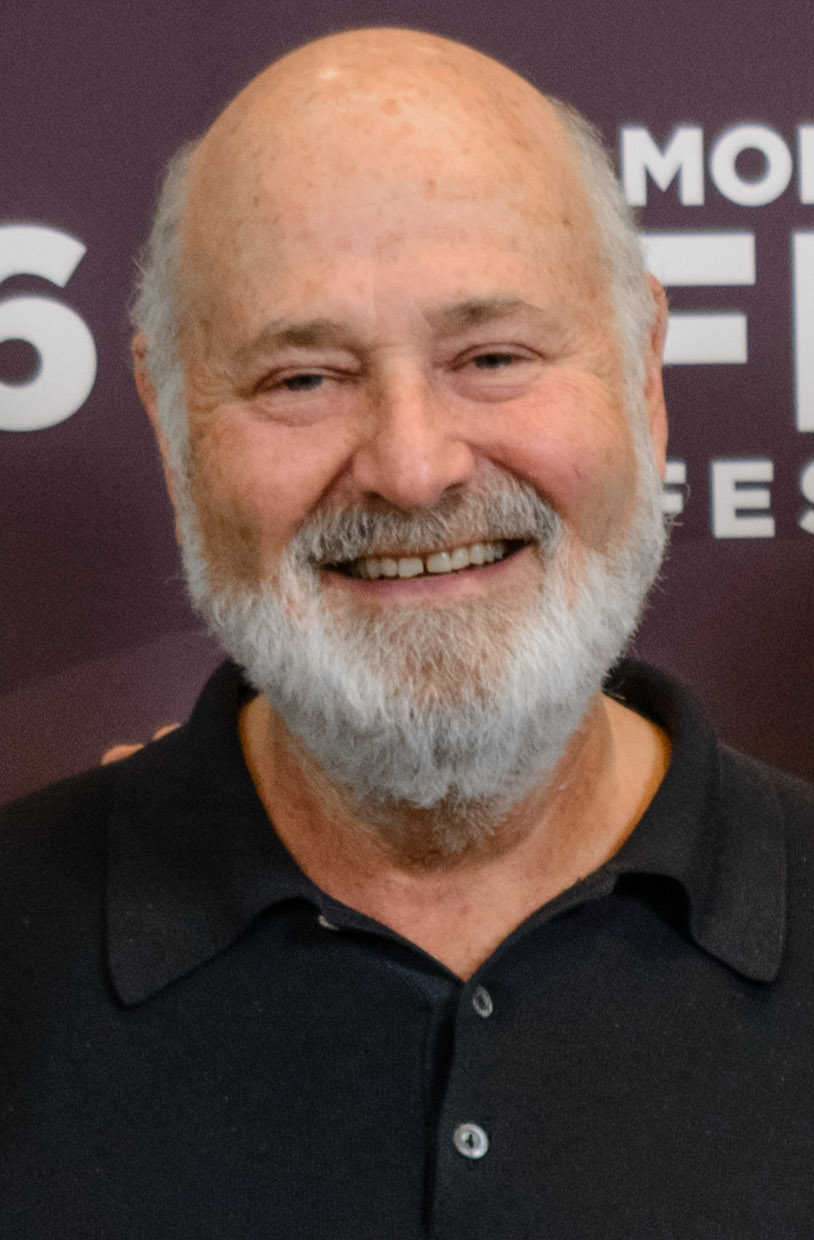
Rob Reiner: "Whatever you like to do, do a lot of it. Do it every day."

Photo of Rob Reiner from Wikipedia, source Neil Grabowsky / Montclair Film Festival

I was fortunate to have met and shared a meal with Rob Reiner some years back. I wanted to take a moment to share this story on the sad occasion of his death this week.

It was 2003 or so. I lived and worked for Akamai in Boston. I had been going back and forth to San Mateo office a fair bit that year, often taking a red eye home from San Jose. Back then the San Jose airport was smaller than it is now, and was especially quiet at the evenings. Not a lot of dinner options, so McDonald's it was.

That day I was surprised to recognize Rob Reiner in line right in front of me! He was traveling with some assistant-type person, patiently waiting. I tend to not bother celebrities in public, but I was moved to say something.

Sef: Hello Mr. Reiner. Forgive me but I just wanted to say how much I enjoy your work. I'm a really big fan.

Rob Reiner (big grin): Hi! What's your name? Thanks for introducing yourself. What have I done that you like?

I think he genuinely wanted to know. I knew his big films pretty well — When Harry Met Sally was the most popular, A Few Good Men had been up for Best Picture, Spinal Tap is well, Spinal Tap. These are all really great films.

Sef: The Princess Bride, hands down. I love the story and I love what you did with it.

Rob Reiner: I'm glad you said that. That's my favorite too.

Hearing that was more than I'd hoped for. I thanked him and begged off so he could order his burger and have dinner in peace. But no, in that New Yorker voice and with a big smile he said, "C'mon, let's have cheeseburgers!" The three of us all sat.

We had a nice talk over dinner. He asked questions and seemed genuinely interested in what I did -- work, family. But the highlight was toward the end.

Rob Reiner: What else can I answer for you?

Sef: What would you tell someone early in their career?

At this point I was about thirty years old, so hardly that early in my own career, but I was asking in a genuine way. He answered straight away.

Rob Reiner: Whatever you like to do, do a lot of it. Do it every day. Me, I like writing so I try to do that of it every day if I can. That's how you get good.

He then told a few stories about people he'd met who don't do this. I guess when you're someone like him, people ask you frequently for jobs or if you'd produce their movie or whatnot. He said he asks what was the last thing they'd written, or what they were working on now, or what'd they'd written today. And he could tell if they did it often and did it for fun. If they didn't do it often, then how good a writer were they likely to be?

I was struck by what a nice and interesting, and interested, person Rob Reiner was. It was incredibly generous for him to spend time with a fanboy when he could be off duty and just enjoying his cheeseburger. What a gem.

My Love Letter to ATP

ATP Podcast Art

I listen to a fair number of podcasts. The Accidental Tech Podcast is my favorite by a mile.

It's the one that I look forward to every week. It comes out on Thursdays, often right when I'm leaving work. It's a sign that the weekend is right around the corner.

I'll get some of the reasons why out of the way quickly, the reasons particular to me and my tastes.

  • The topic, the world of technology and all things around it, is right in my wheelhouse. It's my profession, but also my hobby. That's what got me in the door. If this stuff isn't your thing, then this podcast won't be either.
  • They talk a lot about Apple products and that ecosystem, which where I spend my personal time.
  • But they also cover a lot of issues that touch on the world of technology: business, law & politics, companies, social media. I like their descriptions, their take, their rants.
  • They end up talking a lot about personal tech too. Like how to manage family photos and backups. The hard, fussy stuff that ends up taking up so much of our lives. For example, what's the best way to help parents deal with passwords. Hard stuff!
  • I especially like tech-adjacent topics like home audio/video, home automation, and gaming.

But what I appreciate more than the content of ATP are the hosts and the care they take to produce a good show.

  • They are friends. It's nice hanging out with people who like each other. It's kind of like we have permission to eavesdrop and be a part of that.
  • They're not afraid to discuss their lives. Stuff like families and work/life stress. This is good stuff for me because I'm in the same life situation as them: middle-aged tech dads. But bringing their whole selves to the show is a bit of vulnerability that I appreciate.
  • ATP is exceptionally well produced. I didn't appreciate this until I'd heard so many other podcasts that are produced terribly, with bad recordings or poorly mixed. Usually you have to turn to the corporate, fancy podcasts, but they also have lots of ads and are usually different kinds of shows.
  • And the show is so well edited. They edit it without losing any of the content or the pacing, and sparing us all the awkward "um where were we" and technical futzing.
  • They don't talk over each other. Part of this is discipline, part of this is just politeness. But also now that I've listened to the pre-edit "bootleg" a couple of times, I've come to appreciate how much of this is also fixed in the edit. Nice job Marco.
  • They are respectful. They don't put people down, they aren't mean. When they kid each other it's in good fun.
  • When (rarely) they wade into social justice or world events, they do so respectfully and thoughtfully. They understand that as three three cisgender white guys, it's good to have views to share, but also right to listen and help others.
  • Their show is reliable. It's great that they keep to a regular format and schedule. It fits into the rest of your life and becomes something you count on.
  • Finally, some small things: Yay for proper use of chapter markers, hardly anybody else uses them properly. And I like their their occasional forays into car talk, just because I like car stuff too.

Although they joke about how much of the show is devoted to feedback, it's one of my favorite parts. It shows that they listen and are learning. And they share that learning with all of us. A recent example was six minutes or so into Episode 570 when I learned how home power battery systems, when full, signal this by changing the frequency of AC power as a signal to solar panels to back off. Fascinating!

I like the members-only specials. It's OK with me that these are only available to members. They've been candid lately about ad revenue drying up and they could use the extra revenue channel. These episodes are a nice way to reward members. They've managed to do these without compromising the core show.

The best thing they ever did on ATP was getting a sponsor to send John toasters to review. And review he did! I didn't appreciate how many bad toasters there are, and how they can be bad for so many reasons. My favorite reason was poor knob feel.

Nice work John, Marco, and Casey. Please keep it up for a long, long time.

The Big Dig

Big Dig podcast title art (WGBH)

I just finished the Big Dig podcast and it's worth a listen. It's about Boston's Central Artery/Tunnel Project, the most expensive highway project in US history. They cover the whole story, from conception, to getting it approved, to years of execution, and then the fallout from cost overruns and mismanagement. The podcast is well produced and has a lot of primary-source interviews.

I have a little bit of a personal connection, since I lived in Boston during the project's later years when it was on the news all the time. I even toured a part under construction.

But what I find most compelling is trying to connect to the question, can America build big infrastructure anymore? It's something I think lot about. We benefit from by the giant projects from the past (dams, bridges, interstates) but can't maintain them properly; we struggle to take on new things like high-speed rail.

They place most of the blame on headwinds that didn't exist in the public-works heyday of the twentieth century. Leaders are under more scrutiny; projects fall under a bunch of regulations intended to protect the environment and workers. Public commentary slows things down.

The problem is, while the old way was easier, it also caused a lot of harm. I learned the story of the Cambridge and East Boston families that stopped interstate projects that would have leveled their homes and neighborhoods. I know those places well. I used to own a home right where one of those roads was supposed to have been. I sure am grateful to those protesters who won!

It ends on a hopeful note. Not that it's easy, nor are we necessarily that much better managing big projects now. But there are success stories.

One part I especially liked was 20 minutes into the final episode, in the final interview with Fred Salvucci, where he told the story Saint Francis. God tells Francis to build a cathedral, but then tears it down. Francis builds another, God destroys it again. Why, Francis asks. Because it's not enough to build a physical cathedral, but you also have to build the support for it in the hearts and minds of the people. Maybe that's the part we're not doing well enough now.

Danny Lewin's 42nd Birthday

It's been nearly eleven years since 9/11 and I still think about Danny fairly often. Sometimes I think about the wife, sons, family, and friends that he left behind. I'm sure they miss him terribly.

More often, though, I think of how his life relates to mine. We were about the same age in 2001, but not peers. I was an engineer at his company, Akamai.  He was a force of nature.

So when I think of Danny, I think about...

  • how much he did in his thirty-one years.
  • all the great things that have happened to me since I was thirty-one. Two wonderful kids, amazing life experiences with my lovely wife, good career stuff.
  • what a positive, can-do outlook accomplish. Both for yourself and others. Danny had that in spades.

If I was able to ask Danny how to best honor him, I think he'd tell me something amazing with urgency. He'd then kick me in the pants to go do it.